 Dr. Clive Clutton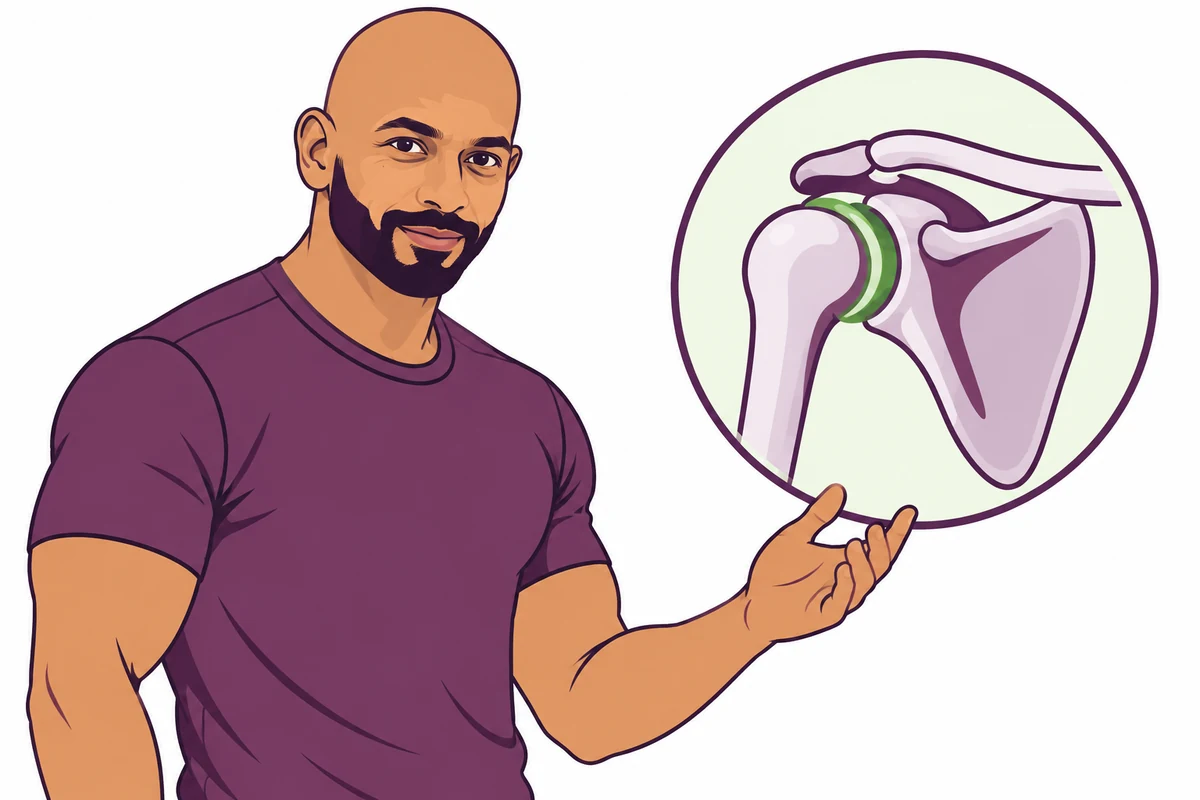
What is usually going on
Common sources include irritated rotator cuff and biceps tendons, stiffness in the shoulder joint or upper back, and the AC joint at the top of the shoulder.
Imaging can show tendon changes in people who have no pain.1 Findings matter when they match your symptoms and your exam, which is why I do not decide from a scan alone.
What I see in lifters and active people
Pain on bench press, overhead press, pull-ups, snatches, throwing and racket sports, often after more volume, a new grip or a programme change. Sometimes a stiff upper back or limited shoulder blade control pushes extra work onto the shoulder.
How treatment works here
- 1Assess. I find which positions and loads provoke the pain and check your neck, upper back and shoulder blade too.
- 2Release. Soft-tissue treatment to the chest, shoulder blade and rotator cuff area where it helps.
- 3Activate. Control of the shoulder blade and rotator cuff through your full range.
- 4Rebuild. Loaded pressing and pulling progressions, built up until you are back to your normal programme.
What you can do this week
- Reduce what feels sharp. Lower the load, change the grip, shorten the range or swap the exercise.
- Keep gentle movement going through the comfortable range.
- If sleep is disturbed, try avoiding lying on the sore side.
Get urgent care if you suddenly cannot lift your arm after an injury, the shoulder looks deformed, or the joint is hot, swollen and red with a fever. Call 911 for shoulder or arm pain with chest pressure, shortness of breath or sweating.
Common questions
Do I have a rotator cuff tear?
Some people do, and many people with changes on imaging have no pain at all. Your exam and how you respond to loading tell me more than a scan alone. I will refer for imaging if it would change the plan.
Do I have to stop pressing?
Usually not completely. We change the load, grip, range or exercise so you keep training while the shoulder settles.
Will I need spinal adjustments?
My treatment is mostly soft-tissue work and exercise. If an adjustment might help, I will explain it first.
Sources
- Lewis J. Rotator cuff related shoulder pain: assessment, management and uncertainties. Man Ther 2016;23:57-68. Narrative review. Link
This page is general education. It does not replace advice from a clinician who has examined you.